
Picture this. You approve a lovely sample, send the advance, and wait. Three months later your first batch turns up smelling a bit off and feeling runnier than anything you tested. Nobody warned you, and now nobody is replying to your emails either.
Stories like this are common among first-time founders, and the cause is rarely the product idea. It’s usually the choice of who makes it. If you’re weighing up a cosmetic manufacturer in India right now, price will probably take up most of your thinking, and that’s fair. But a cheap quote from the wrong factory tends to cost more in the end than a sensible quote from the right one. Here are five signs that point to a partner worth trusting.
1. They’re Happy to Show Their Paperwork
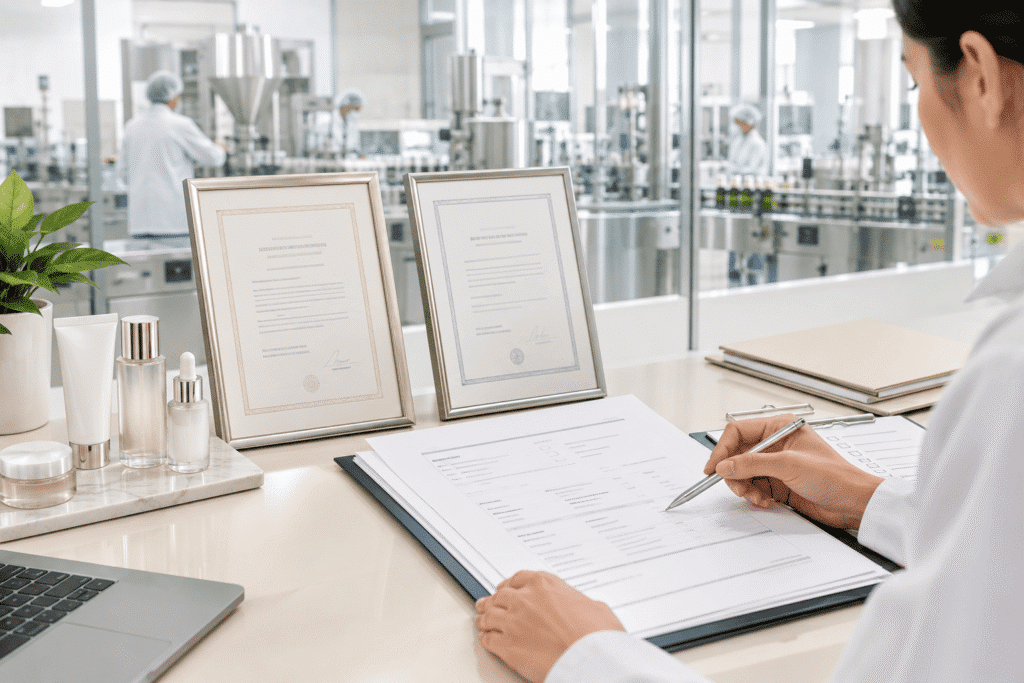
Start with the dull stuff, because it’s the easiest to check. A serious factory will have GMP compliance and, ideally, ISO 22716, the international standard for cosmetic manufacturing practice. Good ones usually mention it before you ask. If you have to chase someone for a copy, you’ve already learned something about them.
Reading a certificate properly
Owning a certificate doesn’t mean it covers your product. Look at who issued it, when it runs out, and which address is printed on it. Some companies are certified at one unit while your order gets made somewhere else. Fortune International lists its ISO 22716 and GMP certification openly, which is the kind of openness you should expect from anyone on your shortlist.
2. They Let You Take Your Time with Samples
A good formulator would much rather hear complaints at sample stage than after thousands of units are filled. So see how they take feedback. Say you tell them the lotion feels too thick or the fragrance is too strong. A decent team just says “okay, let’s tweak it.” A team that keeps steering you toward approval is probably watching its own production calendar.
Your side matters too. A face cream can feel great on day one and heavy by day five. A serum left on a bathroom shelf for two weeks will quickly show whether it separates or changes colour. A quick dab on your wrist won’t tell you any of that.
Don’t skip the ingredient list
Ask who actually develops the formula and whether there’s an R&D team in-house. Then get the full ingredient list. A little trade secrecy is normal, but if every answer is “proprietary blend,” you have no way to check claims like vegan or paraben free before they end up on your label.
3. The Quote Is Easy to Follow
A low quote can look great on paper. Then filling charges, labelling, stability testing and even the samples show up as extras, and the number you were so pleased with isn’t the number you pay. A trustworthy cosmetic manufacturer in India usually sends a proper breakdown without being pushed, and gives you a straight figure for minimum order quantity.
Low MOQs are a real help if you’re testing a brand on a tight budget. It’s still worth asking whether they limit your packaging choices or push up the cost per unit. And if you can’t explain the quote to a friend after reading it, ask them to send a clearer one.
4. Batches Are Tested and Traceable
Failed batches aren’t fun to talk about, which is exactly why you should bring them up early. Ask how stability and microbial testing work at their unit. Ask too whether every batch gets its own number linked to the raw materials, the production date and the test results. Months down the line, if a customer reports a rash, that number is what lets someone actually find the cause.
Ask about a time it went wrong
Ask them about a batch that didn’t pass. Maybe a pH drifted, or a fragrance turned sharp in a new lot. People who really run a production line have stories like that and share them easily. If the answer is that nothing has ever gone wrong, I’d be a little suspicious.
5. They Feel Like a Partner from the First Email

Read their replies closely. Are they specific, or cheerful but vague? The good ones bring up packaging lead times and labelling rules before you’ve thought of them. A new brand needs more than production, and help with export labelling or compliance can save months of guesswork. Fortune International, for example, handles formulation, packaging and compliance together, which suits founders who don’t have a big team yet.
Also watch how they treat a small first order. A team that gives a 500 unit run full attention will most likely do the same at 50,000, and the ones who treat small clients as a nuisance rarely change later.
How to Check All This Without Losing a Month
Pick three manufacturers and send each the same list of questions by email. You’ll learn a lot from who replies clearly and who dodges. Order samples from the best two, and if you can, visit the unit or ask for a video walkthrough. A tidy production floor says more than any glossy brochure.
Speak to one or two brands they’ve worked with, and actually make the call. Then start with a small first order. Even the right cosmetic manufacturer in India should earn your bigger volumes through consistent results, not just a good first impression.
Picking the Right Partner Takes a Few Awkward Questions
Honest certificates, samples you can test, clear pricing, proper batch records and decent communication won’t promise a flawless launch. Together, though, they cut the odds of nasty surprises by a lot. Give yourself time, and don’t let a low number on a quote hurry you along.
The best cosmetic manufacturer in India for your brand is usually the one whose answers stay the same from the first email to the final delivery. If you’d like to see how one team handles these questions, talk to Fortune International, share your product idea, and compare what you hear with the checklist above. A trusted cosmetic manufacturer in India should be glad you asked.
Explore Fortune International’s expertise as the best cosmetic manufacturer in India, offering white label haircare products, third party cosmetic manufacturing, skincare contract manufacturing, premium solutions from a trusted hair oil manufacturer, and customized services as a leading private label skincare manufacturer.